
Whoa! The Solana chain moves fast. Really fast. My first impression was: this feels like a trading pit in a downtown exchange — loud, chaotic, and full of opportunity. At first I thought raw throughput was the whole story, but then I dug into transaction patterns and mempool oddities and realized the narrative is much messier. Something felt off about dashboards that only show balances. Hmm… they hide the story in plain sight.
Okay, so check this out — I’m biased toward tools that let you ask weird questions. I like digging into how liquidity shifts within a single block, or how a faucet can change token distribution overnight. Initially I thought on-chain analytics were just logs dressed up nice, but actually they become a lens into real-world behavior, and that lens matters for both builders and traders. My instinct said the right explorer can save you hours of guesswork. I’ll be honest: some explorers are all polish and no depth; this part bugs me.
Short version: explorers should be fast, accurate, and easy to interrogate. Long version: they need flexible filters, stable APIs, historical traceability, and a way to connect on-chain events to off-chain narratives — like a wallet service outage or a token migration announcement. On one hand, speed and UX win new users; on the other hand, deep analytics win power users and auditors. Though actually, you need both if you want a healthy ecosystem.
How I Use a Blockchain Explorer in Real Work
Wow! I use explorers in three modes: quick checks, deep dives, and forensic audits. Quick checks are short and sharp — confirm a tx, check a block height, look for confirmation status. Medium investigations last longer — trace token flows across several addresses, reconstruct a swap path, or check for front-running patterns. Long, forensic audits can take days when smart contract events are involved and you need to stitch logs, RPC calls, and off-chain evidence together, because sometimes the truth is hidden in the timing and sequence of events, not just the amounts.
Here’s the thing. Not all explorers let you pivot quickly between those modes. My workflow tries to mirror how humans think: spot, hypothesize, test, repeat. Sometimes a hypothesis is wrong — actually, wait—let me rephrase that — often it is wrong, and your tools need to let you fail fast. On many days I’ve followed a rabbit hole that led to nothing, but that dead-end still taught me somethin’ useful about noise patterns and scraper bots. That pattern keeps me sharp.
Why Data Integrity Beats Pretty Charts
Seriously? Pretty charts are seductive. But charts without provenance are dangerous. Medium sentence here to balance things out. You want to be able to trace a bar on a graph back to the exact transactions, logs, and block metadata that produced it. Long, nested thoughts matter here because when money is involved, you need audit trails that hold up under scrutiny and regulation, especially if you’re advising institutional clients.
On one hand, a good UI lowers entry friction for newcomers. On the other hand, power users need raw exports and a queryable API. My approach has always been pragmatic: use the UI for rapid intuition, then move to exports or APIs for verification. And yeah, sometimes the API docs are terrible — very very annoying — but that doesn’t mean the data is bad; it just means the team hasn’t invested in developer experience yet.
What to Look For in a Solana Explorer
Wow! Reliability is number one. Uptime, accurate slot reporting, and TTL handling are basic non-negotiables. Then come search ergonomics — fuzzy searching for addresses and token symbols, quick toggles for program IDs, and filters for instructions inside transactions. You also want visible decoding of instruction data and inner instructions, because Solana’s parallel runtime means a single transaction can hide a lot of behavior unless it’s properly decoded.
Medium-level features I care about include token holder distributions, liquidity pool snapshots, and on-chain governance traces. Longer-term features that win my loyalty are historical indexing (so you can compare ‘today’ to ’12 months ago’ precisely), webhook support for alerts, and reliable CSV/JSON exports with timestamps and slot references. If you can map events to off-chain signals — like a Discord announcement or GitHub release — you can tell a story, not just show numbers.
Where solscan explorer Fits In My Toolkit
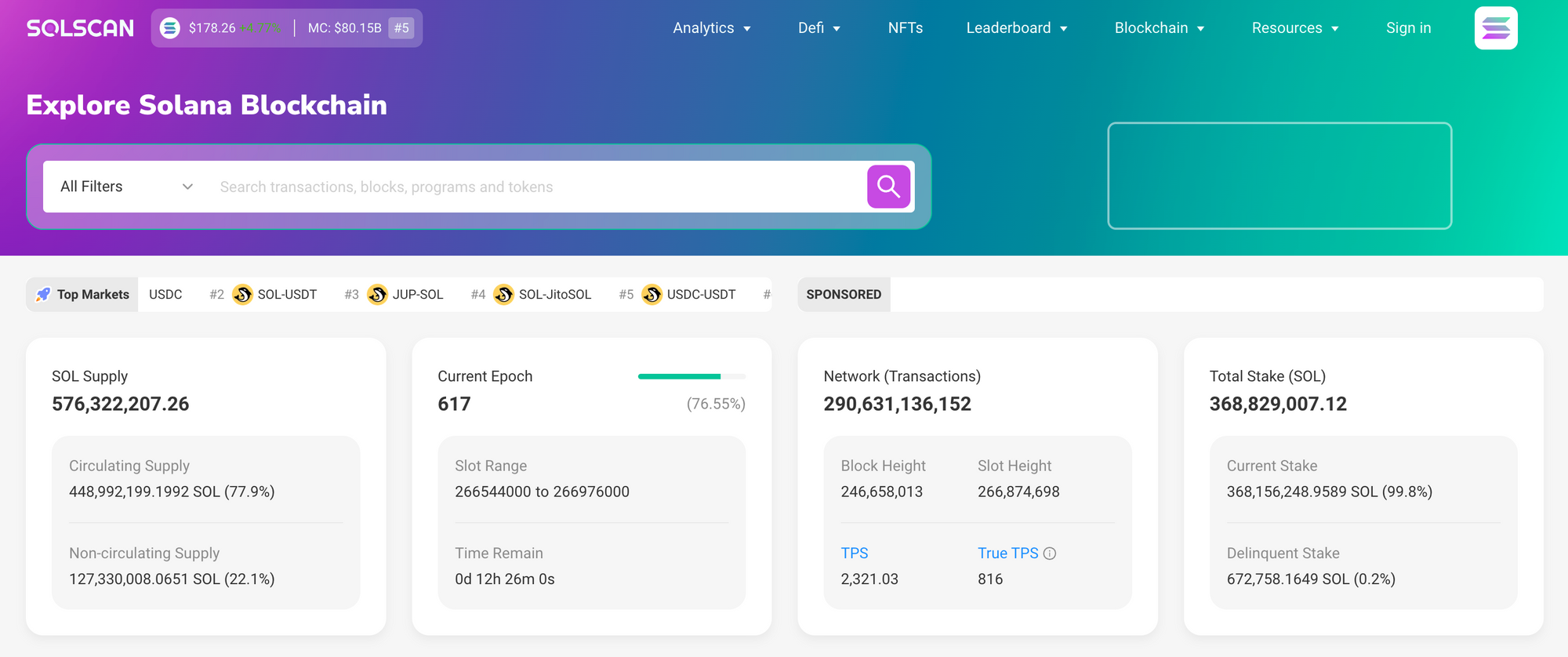
Whoa! I found myself using the solscan explorer for a mix of quick checks and deeper dives. The search feels snappy. The instruction decoding is often good enough to cut through the noise. Initially I thought it was just another UI, but after a few audits it became clear that some of its tracing features and token analytics are genuinely useful for operational work. Something about the balance of speed and depth kept pulling me back.
My instinct said use multiple explorers — don’t put all your trust in one UI — though actually, when you’re under time pressure you naturally gravitate to the tool that gives the clearest answers fastest. For me, solscan explorer became that go-to for many everyday tasks, and when things got complex I paired it with RPC calls and on-chain log scrapes. I’m not 100% sure every feature scales to institutional needs, but for most dev teams and power users it’s solid.
Tactical Tips for Using Explorers Effectively
Wow! Start with a hypothesis and use the explorer to falsify it. Ask simple questions first: which wallet moved tokens, what program executed the swap, and in which slot did the state update? Then chain these queries. Use the instruction view to see inner instructions and cross-program invocations — that’s where hacks and exploits often hide. Sometimes you’ll see a benign-looking instruction that triggers a program that does the heavy lifting; don’t miss that.
Use CSV/JSON exports to create reproducible audit trails. If you’re building tooling, cache historical snapshots because querying long ranges via RPC can be slow or rate-limited. Also, keep an eye on token mint authorities and freeze flags — they tell you whether supply changes are possible later. And remember: on-chain immutability means evidence is permanent, but indexing choices can change how easy that evidence is to fetch.
Common Pitfalls and How to Avoid Them
Whoa! Relying on a single explorer without cross-checks is risky. UIs can have bugs. Medium-length thought: confirm suspicious numbers with raw RPC calls or another explorer. Longer thought for emphasis: if a transaction looks like it created or destroyed tokens, verify the token program logs and check the mint authority status, because token metadata can be manipulated off-chain and sometimes explorers display merged or enriched views that hide edge cases.
Another pitfall: over-interpreting on-chain data without context. A massive swap could be arbitrage, a rebalance, or a rug; the same numbers can mean different things depending on temporal context. (oh, and by the way…) Trailing transactions, mempool spikes, and off-chain announcements all change interpretation. So build your narrative from both the chain and the community signals.
FAQ — quick hits
Can explorers show me who controls a token?
Short answer: sometimes. You can see mint authorities and holder distributions, but control can be multi-sig, time-locked, or off-chain controlled. Use holder snapshots and transaction histories to infer control, and double-check on-chain governance records for formal authority transfers.
Are explorer APIs reliable for automation?
Yes, but treat them like any external dependency. Cache responsibly, handle rate limits, and cross-verify critical data with direct RPC queries. If you automate trading or alerts, add redundant checks to avoid false positives.
How do I trace complex cross-program swaps?
Look at inner instructions and logs, follow token account changes step-by-step, and map program IDs to their known behaviors. It helps to export the transaction and replay the sequence analytically. Sometimes you’ll need to consult program docs or source code to decode custom instruction data.